
Chicken Pox
What is Varicella?
Varicella is also known as Chicken Pox. It is a viral infection caused by Varicella- Zoster virus. Varicella can occur at any age (more common in children) and is more frequently seen during seasonal change.
How can one get Varicella?
Varicella is an infectious disease which is transmitted by nasal droplets during the act of sneezing or coughing.
How does the infection spread?
Varicella is a highly contagious disease. Once a person is affected, the chances of his family members getting affected increase many fold.
How does Varicella appear?
At the onset, there may be mild to moderate fever for two days.
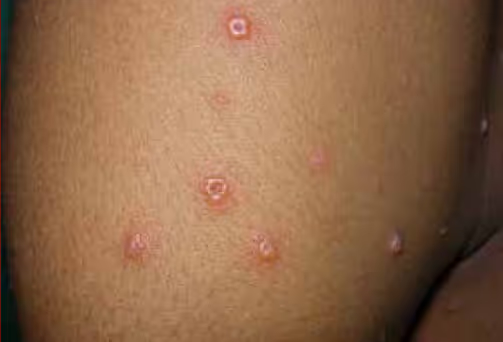
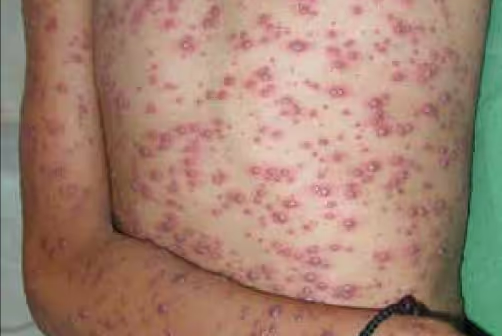
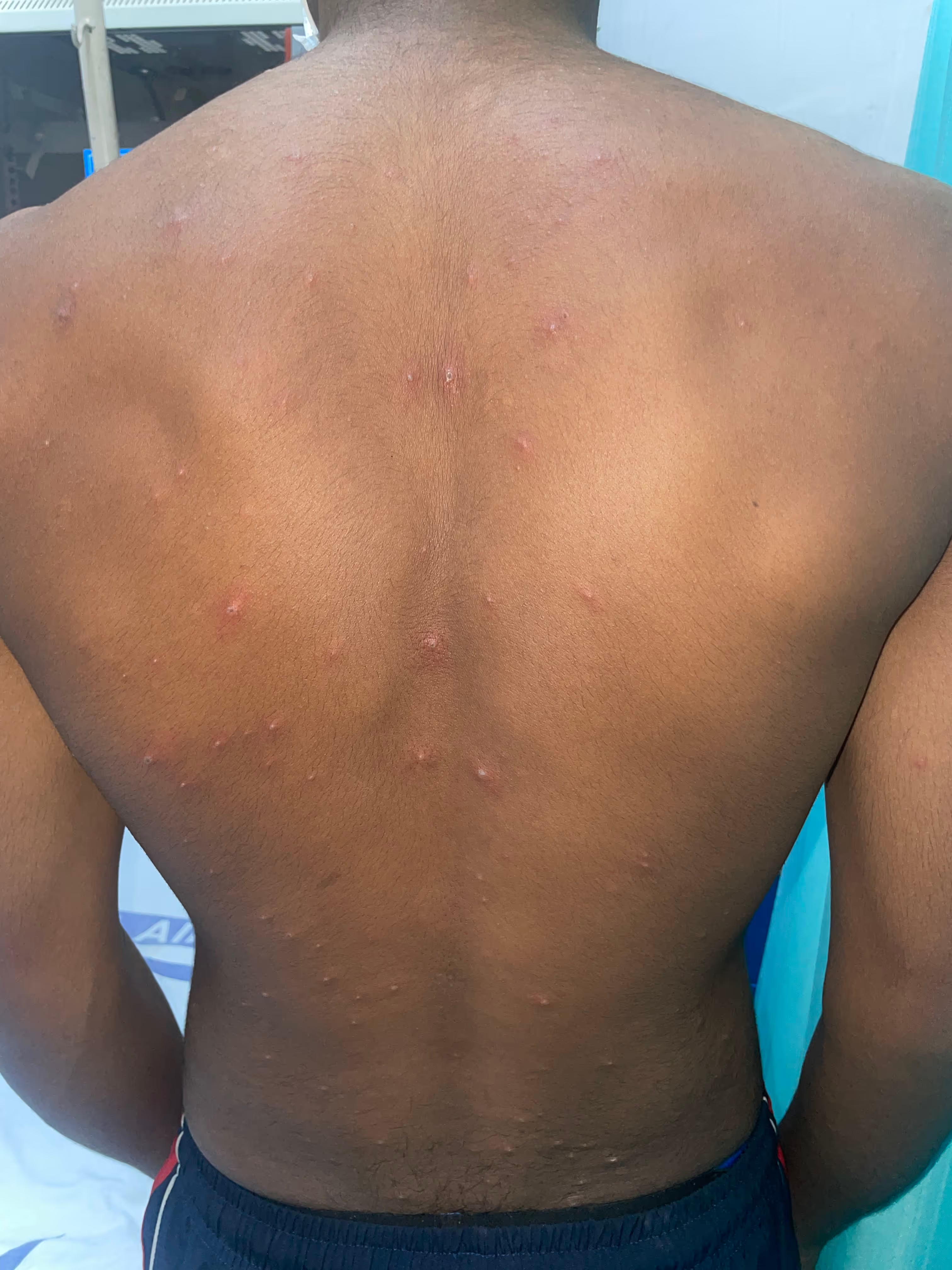
The skin rash starts as small red bumps, which may be slightly itchy. They may be few or all over the body. Later they become filled with transparent fluid and some may be filled with pus. This stage lasts for 4 to 5 days, after which the lesions dry to form scabs or crusts. A person is infectious till the crusts form.
In people who have a poor immunity, the infection can be very severe, involving the liver, lungs and brain.
What should one do if he/she gets Varicella?
Consult a physician /dermatologist since it can be easily diagnosed by the clinical appearance of the lesion.
Are there tests to confirm the diagnosis of Varicella?
No laboratory tests are usually needed for diagnosis.
Rarely, when the diagnosis is less certain, the doctor may scrape the skin tissue and examine them under a microscope to confirm the diagnosis.
What is the treatment for Varicella?
-
Stay at home/hospital in isolation to prevent transmission.
-
There is no restriction to taking a bath.
-
In mild illness with fever and minimal skin rash, symptomatic oral medication such as paracetamol as per the treating physician’s advice and local application of soothing agents such as calamine may be sufficient.
-
In widespread disease in adults and in order to shorten the episode, oral antivirals such as acyclovir are often administered. This needs to be started as soon as possible, preferably in the first 72 hours.
-
In people with poor immunity (HIV, cancer) admission to a hospital for intravenous medication is required
Can Varicella be prevented?
A vaccine is available and needs to be given when the child is 12 to 15 months old. An additional dose at the age of 4 to 5 years gives almost 95% protection against chicken pox. Please consult your paediatrician for additional information.
Can Varicella recur?
It is uncommon to get a recurrence in Varicella. Rarely, relapses can occur if the patient’s immune status is very poor
Can chickenpox be treated with traditional medicines or herbal applications?
Chicken pox can be effectively prevented and treated. Stay away from traditional beliefs about the disease.
Disclaimer: This article is only for general patient information and is not intended for self medication. There is no legal liability of IADVL arising out of any adverse consequence to the patient. Subsequent to its use for self treatment of the disease images adjust for the depiction of the condition and is not to be used for any other purpose.
More in Disease & Conditions
Explore articles in this section to gain a deeper understanding of various skin diseases and conditions. Each article provides detailed information on symptoms, causes, and treatment options, helping you to manage and address these dermatological issues effectively.

What is Psoriasis ?
Psoriasis is a skin condition where new skin forms at a faster rate, showing up as red rashes with whitish scales, commonly over elbows, knees, and other body parts.

What is Dandruff ?
Dandruff is a common scalp condition in which small pieces of dry skin flake off from the scalp and is usually associated with itching. The exact cause of Dandruff and Seborrhoeic Dermatitis is unknown.

All About Fungal Skin Infections
Dermatophyte infection is a superficial fungal infection of skin, hair and nails. It is also known as ringworm. In Hindi it is termed as Daad and in Marathi it is termed as Gachkaran.